Exploring the Use of Virtual Reality Puzzles in Developing Real-World Problem-Solving Skills
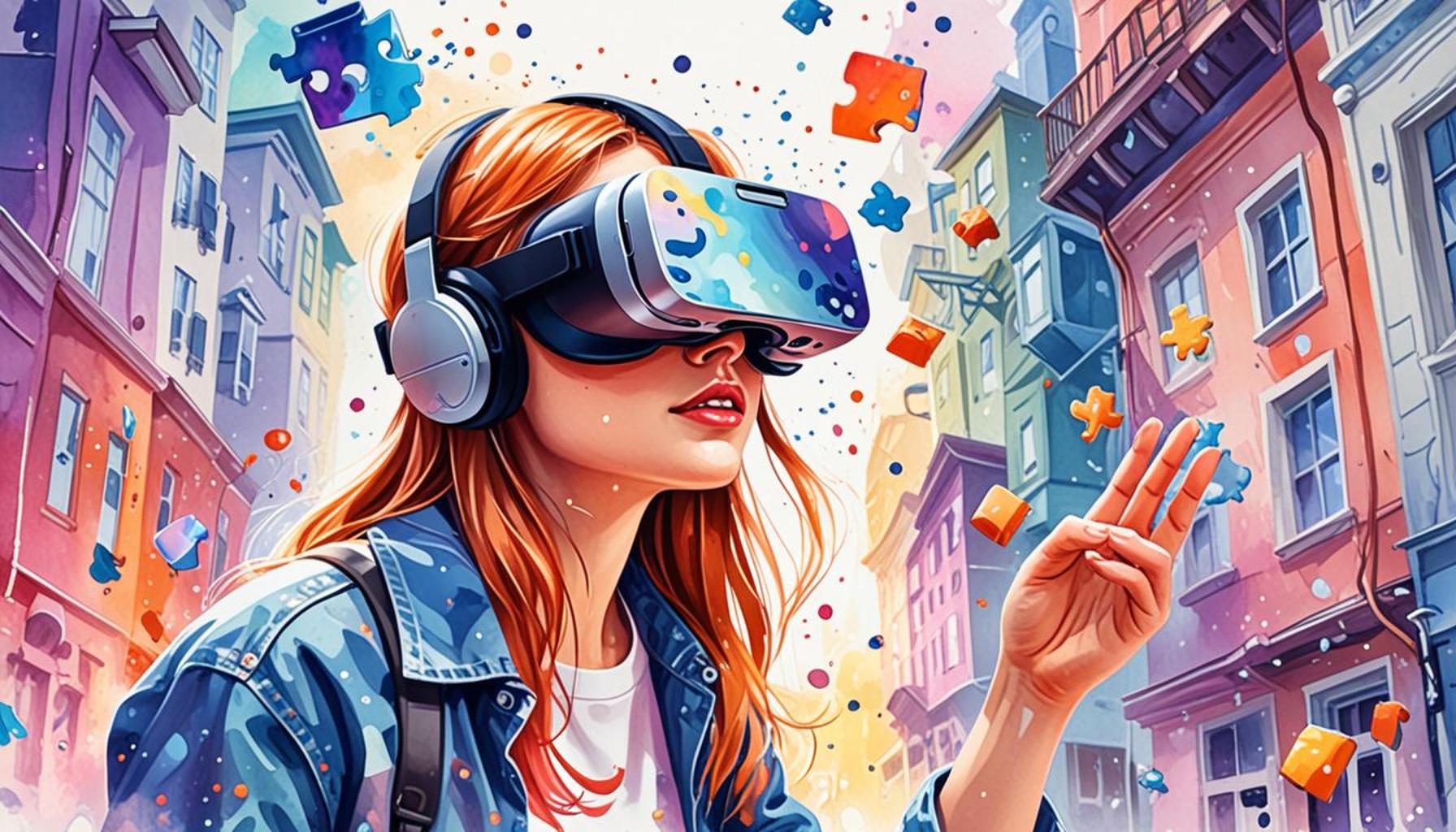
Unlocking Solutions Through Virtual Worlds
Imagine stepping into a world where reality bends to challenge your mind. Virtual reality (VR) puzzles offer engaging experiences that redefine the boundaries of traditional problem-solving. As technology advances, the potential for VR to enhance our cognitive skills in real-world scenarios becomes increasingly apparent, pushing the limits of how we learn and solve problems.
These immersive encounters do not merely entertain; they educate and transform our thought processes. One key feature of VR puzzles is Interactive Learning, where users actively engage with the challenges presented to them. For instance, solving a complex escape room scenario in VR requires players to think critically, analyze their surroundings, and use clues effectively. This hands-on approach dramatically enhances retention and understanding of the concepts involved, making learning more impactful than mere passive observation.
Another essential characteristic is Realistic Simulations. VR technology allows people to simulate genuine life challenges within a controlled environment. For example, medical students can practice intricate surgical procedures without the risks associated with real-life operations. Such simulations not only improve skill applicability in practical situations but also prepare individuals to navigate similar scenarios confidently in their careers.
Moreover, many VR puzzles necessitate Team Collaboration, where players must work together to find solutions. This aspect fosters not just teamwork but also enhances communication skills—traits that are critical in today’s workplace. A study found that teams who participated in VR-based problem-solving activities demonstrated improved interpersonal dynamics and were more efficient in executing tasks.
Furthermore, research indicates that Gamification of problem-solving skills significantly boosts a person’s ability to think critically. The sensory experiences provided by VR create an immersive environment that can lead to extraordinary breakthroughs in cognitive development. Current VR platforms cater to a diverse audience, offering genres that appeal to various age groups and skill levels, from children exploring basic logic puzzles to adults engaging in complex strategic challenges.

As we delve deeper into this innovative intersection of technology and education, we invite you to explore how these puzzles may not just entertain but also equip individuals with essential problem-solving tools needed in the real world. The integration of VR in educational settings has already shown promising results across several institutions, paving the way for future advancements. Join us in uncovering the myriad ways VR can reshape our approach to challenges and how it might empower future generations to tackle complex issues with confidence.
DIVE DEEPER: Click here to uncover the secrets of strategic thinking
The Cognitive Benefits of VR Puzzles
As we dive into the realm of virtual reality puzzles, it becomes evident that these constructs are not merely entertainment; they represent a significant development in learning methodologies. These puzzles leverage complex architectures embedded within virtual environments, whereby users navigate challenges that mirror real-life problems and scenarios. This potent blend of engagement and education leads to enhanced cognitive development and problem-solving capabilities.
One of the primary cognitive advantages of engaging with VR puzzles is the improvement of spatial awareness. Unlike traditional puzzle-solving methods, VR puzzles immerse users in an environment where they are required to orient themselves within a three-dimensional space. This interaction activates specific brain functions responsible for spatial reasoning, which is essential in various professions, such as engineering, architecture, and even medicine. As individuals learn to navigate and manipulate objects in a virtual space, they develop a mental map that improves their ability to tackle spatial challenges in real-world settings.
Furthermore, VR puzzles harness the power of critical thinking and analytical skills. Participants must often evaluate multiple cues that may be disguised within the puzzle environment. For instance, in a detective-style VR puzzle, players need to discern what evidence is relevant and what is simply a distraction. This process fosters not just observation but also meticulous inquiry, reflecting the kind of analytical thinking required in fields such as law enforcement and research.
Another advantage is the adjustment of stress management techniques. In a virtual setting, users often find themselves facing time-sensitive challenges that simulate high-pressure situations. For example, an escape room scenario may impose a strict time limit, prompting players to think quickly and efficiently. By regularly exposing oneself to this type of environment, individuals can better develop techniques for managing real-world stressors, which is invaluable in fast-paced work environments such as healthcare, finance, and corporate settings.
Key Skills Developed Through VR Puzzles
Engaging with VR puzzles cultivates a variety of essential skills that translate into practical, real-life applications. Here are some particularly notable skills that participants often develop:
- Problem-Solving Proficiency: As players tackle various puzzles, they learn to devise strategies and adapt their approaches when encountering unforeseen obstacles.
- Collaboration and Communication: Many VR puzzle scenarios require teamwork, allowing players to practice conveying ideas and working cohesively with others.
- Creativity and Innovation: The unique scenarios and challenges within VR environments often demand creative thinking, encouraging participants to think outside the box.
- Technical Skills: Navigating advanced technology within VR puzzles can enhance digital literacy, a crucial skill in today’s job market.
Exploring these cognitive benefits and developed skills positions VR puzzles as a transformative tool in educational frameworks, from schools to corporate training programs. As institutions invest in such technologies, the relationship between virtual environments and real-world problem-solving skills becomes strikingly clear, marking a significant evolution in how we equip individuals for future challenges.
Exploring the Use of Virtual Reality Puzzles in Developing Real-World Problem-Solving Skills
The integration of Virtual Reality (VR) puzzles into educational and professional training programs offers a revolutionary approach to enhance problem-solving skills. Unlike traditional methods, VR provides immersive environments where individuals can experiment, make mistakes, and learn from them in a controlled setting.
The Impact of Immersive Learning
Immersive learning experiences through VR puzzles allow participants to engage in scenarios that mimic real-world challenges. This approach not only increases engagement but also cultivates critical thinking and decision-making abilities. For example, users navigating a virtual escape room must deduce clues and solve complex puzzles under time constraints, stimulating both creativity and logical reasoning.
Enhancing Collaboration and Communication
Another significant advantage of VR puzzles is their ability to foster collaboration among team members. VR environments often require participants to work together, promoting teamwork in a unique, interactive way. As individuals interact within these virtual settings, they naturally develop soft skills such as communication and leadership, necessary for addressing complex real-world problems effectively.
| Category 1 | Category 2 |
|---|---|
| Immersive Learning | Provides engaging experiences that enhance problem-solving skills through realistic simulations. |
| Collaboration and Communication | Encourages teamwork and enhances soft skills critical for real-world problem-solving. |
In addition, the use of VR puzzles can be tailored to specific fields, such as healthcare, engineering, or education, making the learning experience more relevant and impactful. By bridging the gap between theory and practice, VR supports the development of not only cognitive skills but also instills a deeper understanding of real-world applications, making it a valuable tool in today’s learning environment.
DISCOVER MORE: Click here to enhance your decision-making skills
Integration into Educational and Professional Environments
The integration of virtual reality puzzles into various educational and professional settings underscores their potential to reshape traditional learning methods and skills enhancement. Institutions across the United States are beginning to recognize the value of these immersive experiences, not only as a means of engaging students but also as tools for fostering critical skills that are increasingly valuable in today’s job market.
In educational contexts, schools are utilizing VR puzzles as a bridge between abstract concepts and tangible skills. For example, in science classes, students can manipulate molecules in a virtual lab, solving puzzles that require them to apply concepts of chemistry and physics in real-time scenarios. According to a study by the Research and Development Institute, incorporating VR technology into the curriculum resulted in a 30% improvement in problem-solving skills among high school students, as they were actively engaged in a hands-on learning experience that was both stimulating and informative.
Beyond classrooms, corporate training programs are leveraging VR puzzles for skill development in a safe yet challenging environment. Companies such as Google and Deloitte are implementing VR-based team-building exercises that require employees to collaborate and generate solutions under pressure. Such real-time problem-solving scenarios enhance teamwork, encourage assertive communication, and train employees to think critically and creatively. For instance, in a simulation of a crisis scenario, team members must navigate through an array of challenges that mirror real-world business dilemmas, further promoting skills in leadership and strategic thinking.
Real-World Applications of Skills Acquired
As the foundational skills developed through VR puzzles are increasingly acknowledged, the real-world applications of these skills manifest in various industries. In healthcare, for instance, surgical simulations using VR technology allow medical students to practice intricate surgeries by solving puzzles related to anatomy and procedural steps. This training method not only enhances their problem-solving ability but also reduces the stakes involved in traditional learning methods where errors can have dire real-life consequences.
In the architecture and engineering fields, professionals can engage in VR puzzles that simulate real-world physical environments. For example, an engineer may face the challenge of designing a structure that withstands natural disasters while managing limited resources. Such hands-on experiences are invaluable as they prepare individuals to tackle complex and unpredictable scenarios that they may encounter in their professional lives. A report from the American Society of Civil Engineers indicates that engineers who have experienced VR training reported a 40% increase in confidence and effectiveness when addressing real-world engineering problems.
Furthermore, the retail industry is beginning to adopt VR puzzles for employee training and customer engagement. Employees can navigate virtual store layouts, solve customer service challenges, and optimize sales strategies, all within a low-risk environment. This approach equips them with essential skills while simultaneously enhancing the overall customer experience.
In essence, the potential of virtual reality puzzles extends far beyond mere engagement; they serve as an innovative tool to cultivate essential problem-solving skills that translate directly into valuable competences within various sectors. As technology continues to evolve, the applicability of VR puzzles in real-world contexts is likely to expand, paving the way for a new generation of learners and professionals who are well-prepared to navigate an increasingly complex world.
DIVE DEEPER: Click here to enhance your problem-solving skills
Conclusion
In conclusion, the exploration of virtual reality puzzles reveals an exciting intersection between technology and skill development, poised to revolutionize both educational and professional landscapes. Our investigation highlights the transformative power of VR in fostering essential problem-solving skills that are indispensable in today’s rapidly evolving job market. With hands-on experiences crafted in virtual environments, learners are not only able to engage in complex problem scenarios, but they also cultivate critical thinking, creativity, and teamwork—qualities that numerous industries eagerly seek.
Moreover, the real-world applications of these acquired skills extend beyond classrooms and training floors, reaching significant fields such as healthcare, engineering, and retail, where they contribute to improved outcomes and heightened efficiencies. The evidence is compelling: studies indicate marked improvements in problem-solving abilities among students and professionals who participate in VR training, underscoring the effectiveness of this innovative approach.
As technology continues to advance, the integration of virtual reality puzzles into training programs and educational curricula will likely become more prevalent, offering rich, immersive experiences that align closely with real-life challenges. As we look toward the future, the potential of VR in shaping a skilled workforce cannot be overstated—creating an invaluable pathway for individuals to develop the confidence and abilities required to thrive in an increasingly complex world. Embracing and expanding upon this technology may very well unlock new horizons for learning, engagement, and performance across all sectors.
Related posts:
Developing Critical Thinking Skills Through Challenging Puzzles
How Riddles and Brain Teasers Improve Cognitive Flexibility in Problem-Solving Scenarios
The Role of Non-Traditional Puzzles in Enhancing Lateral Thinking Skills
Developing Problem-Solving Skills Through Puzzles and Strategy Games
How Competitive Puzzle Solving Can Boost Confidence in Real-Life Challenges
Exploring the Connection Between Mind Games and Resilience in Problem Solving
Linda Carter is a writer and puzzle expert specializing in mind games, brain teasers, and cognitive challenges. With extensive experience helping individuals enhance their problem-solving skills and think critically, Linda shares her knowledge on our platform. Her goal is to empower readers with practical advice, engaging puzzles, and strategies to sharpen their minds and achieve success in the captivating world of mind games and puzzles.