Developing Pattern Recognition Skills through Puzzles
The Power of Puzzles in Enhancing Cognitive Skills
Pattern recognition is an essential cognitive function that plays a pivotal role in how we interpret information and make decisions every day. When faced with complex situations, whether in academics, professional environments, or daily life, being able to swiftly identify patterns can lead to more effective solutions and innovative ideas. Puzzles present an exciting and engaging way to cultivate this indispensable skill.
For both die-hard enthusiasts and casual players, puzzles come in various forms that not only entertain but also stimulate cognitive growth. Here are several key categories of puzzles that promote pattern recognition:
- Jigsaw puzzles: These classic games require players to utilize spatial awareness and visual recognition. Assembling the pieces of a jigsaw puzzle into a cohesive image challenges your ability to see the big picture while honing your attention to detail. For example, completing a landscape scene involves recognizing color gradients and shapes, which jointly create a harmonious whole.
- Sudoku: A popular number-based puzzle, Sudoku enhances logical reasoning and pattern observation. Players must deduce the placement of numbers to complete a grid, relying on their ability to identify patterns in numerical sequences. Research shows that individuals who regularly engage in Sudoku not only enhance their mathematical skills but also improve their critical thinking abilities.
- Crossword puzzles: These stimulate vocabulary enhancement and require players to make connections between words through clues. This form of wordplay encourages the ability to think laterally, inspiring creative thought processes. Regular participants may notice improvements in their language skills, ultimately translating into better communication abilities in both social and professional contexts.
- Logic puzzles: Often featuring in brain teasers, logic puzzles demand analytical thinking and deduction skills. These puzzles can vary from simple riddles to complex scenarios that require several steps to solve. Engaging with such challenges can sharpen one’s ability to think critically, making logical connections that lead to accurate conclusions.
Participating in these activities not only sharpens mental faculties but also fosters skills that are applicable across various fields, from mathematics to the arts. Research indicates that routinely solving puzzles can lead to enhancements in mental agility and memory retention, while also serving as a stress-relieving escape from everyday pressures.
In this exploration of developing pattern recognition skills through puzzles, we will delve into their vital role in both educational and personal environments. Whether you are a student aiming for academic success or an adult seeking to stimulate your mind, the fusion of fun and learning through puzzles enriches our cognitive landscape and opens doors to various possibilities.
DIVE DEEPER: Click here to unlock the secrets
How Puzzles Foster Pattern Recognition Skills
Engaging with puzzles transcends mere entertainment; it acts as a potent catalyst for enhancing pattern recognition skills crucial in both academic and everyday settings. Each puzzle type offers distinct challenges that stimulate our brains, encouraging us to seek out connections and infer meanings from disparate pieces of information. This journey into the world of puzzles creates a robust framework for elevating our cognitive capabilities.
To understand the mechanisms through which puzzles sharpen pattern recognition, it is important to explore specific cognitive processes at play. When individuals interact with puzzles, they activate different areas of the brain responsible for spatial reasoning, language comprehension, and logical deduction. Here are some intriguing ways in which various puzzle types enhance cognitive function:
- Visual and Spatial Reasoning: Jigsaw puzzles compel players to visualize how individual pieces fit into a larger picture. This exercise enhances spatial awareness, allowing individuals to not only identify shapes and colors but also to develop a mental map of spatial relationships. Such skills are invaluable in fields like architecture, engineering, and even art.
- Logical Deduction: The sequential nature of Sudoku requires players to systematically deduce the placement of numbers based on previous entries. This not only improves numerical skills but also cultivates a logical mindset that can lead to enhanced problem-solving abilities in real-world scenarios.
- Language Development: Crossword puzzles nurture vocabulary and linguistic connections. The process of uncovering words based on hints sharpens not only your word recall but encourages abstract thinking. This practice ultimately benefits professionals who need to communicate ideas clearly and effectively.
- Critical Thinking: Logic puzzles often present complex scenarios that demand innovative thinking. By presenting players with challenges where they must utilize both reasoning and creativity, these puzzles promote adaptive thinking—an essential skill in a fast-paced, ever-changing job market.
But the benefits of puzzle-solving extend beyond cognitive enhancement; there is also a social dimension to consider. Solving puzzles can be a communal activity that fosters collaboration, teamwork, and communication. Engaging with others in puzzle-related tasks not only makes the challenge enjoyable but also encourages a sharing of strategies and methods, further deepening one’s pattern recognition abilities.
Moreover, the immersive nature of puzzles serves as an excellent stress-relief tool, which enhances mental well-being while fostering cognitive skills. Psychologists emphasize the importance of maintaining mental agility to counteract cognitive decline often seen in aging populations. Regularly engaging with puzzles can be a fun and rewarding way to uphold cognitive health into later life stages.
In our journey of exploring developing pattern recognition skills through puzzles, it becomes clear that these activities are more than just a pastime. They represent a multifaceted approach to sharpening our cognitive toolkit, equipping us with essential skills that can be applied in a multitude of scenarios, from classrooms to boardrooms. With that in mind, it is time to delve deeper into specific puzzle strategies and their impact on cognitive growth.
| Advantages | Description |
|---|---|
| Enhanced Cognitive Skills | Engaging with puzzles increases focus, attention, and sharpens the mind, leading to improved problem-solving abilities. |
| Improved Memory Retention | Regular practice of puzzles can enhance memory, aiding in the retention of information and recall under stress. |
Puzzles are more than mere fun; they are a powerful tool for developing pattern recognition skills. By regularly immersing oneself in various types of puzzles, individuals can trigger neural pathways that strengthen overall cognitive function and sharpen mental agility. This engagement enhances not only recognition but also categorization and analysis abilities, crucial elements in both academic and real-world applications.Moreover, solving puzzles promotes persistent methods of thinking—an approach that is vital in today’s fast-paced, information-driven society. As learners navigate through complex shapes, symbols, or numbers, they cultivate an acute awareness of details, patterns, and relationships, which translates into superior analytical capabilities. The process of recognizing these patterns is fundamental, for it lays the groundwork for innovative and critical thinking approaches needed in a multitude of professional fields.With the increased accessibility of puzzles in digital formats, individuals can now easily integrate pattern recognition exercises into their daily routine, ensuring sustained mental engagement and growth. Consequently, these fun activities not only serve as leisure pursuits but also act as vital building blocks for cognitive development that can last a lifetime. Through understanding and actively engaging with puzzles, one fosters the tools necessary for advanced reasoning and competitive success in various domains.
DISCOVER MORE: Click here to unlock the secrets of pattern recognition
Strategies for Maximizing Pattern Recognition through Puzzles
While the cognitive benefits of puzzles in enhancing pattern recognition skills are significant, the manner in which one approaches these challenges can amplify their effectiveness. Here, we explore targeted strategies that harness the full potential of puzzles, leading to better results in both recognition and comprehension.
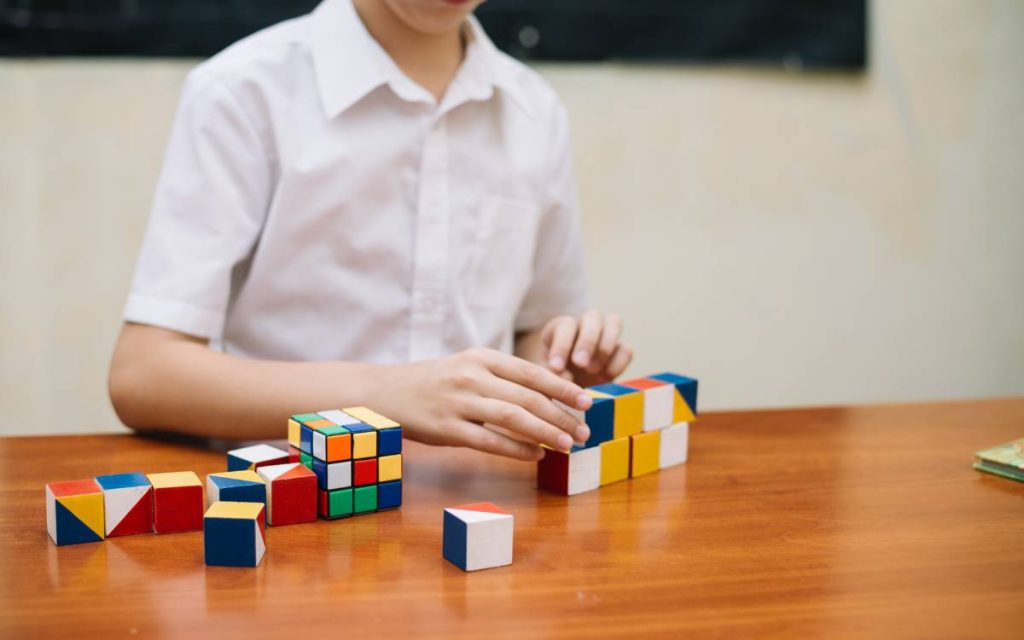
One key approach is to progressively challenge yourself with diverse puzzle formats. By rotating among different types of puzzles—such as mazes, Rubik’s cubes, and logic grid puzzles—you engage various cognitive structures pertinent to pattern recognition. For example, engaging in mazes promotes decision-making processes as you must quickly identify pathways and blockages, while solving a Rubik’s cube requires spatial awareness and the ability to envision multi-dimensional transformations. This variety ensures that your brain remains adaptable and sharp.
Additionally, setting a routine specifically designed for puzzle-solving can be extremely beneficial. Consistency aids in building nerve pathways related to memory and recognition. Research from cognitive neuroscience posits that frequent exposure to complex problem-solving reinforces synaptic connections within the brain. Allocate specific times each week dedicated to puzzles. Over time, you will find yourself not only improving your problem-solving speed but also your innate ability to see patterns in diverse scenarios.
- Start with Structured Puzzles: It’s prudent for beginners to engage with more structured forms of puzzles like Sudoku or crosswords, where rules and expectations are clear. These formats allow for foundational learning, which can later be adapted to more abstract and complex puzzles.
- Practice Mind Mapping: Integrating mind mapping techniques with puzzle-solving can promote pattern recognition. As you work through solutions, create visual diagrams that highlight connections, sequences, and relevant data points. This visual reinforcement captures patterns in memories, aiding future recognition.
Moreover, utilizing technological tools can enhance your puzzle-solving experience. Digital platforms and apps provide vast databases of puzzle types that cater to different skill levels. Many offer tutorials and interactive elements, which can help users develop strategies tailored to their individual learning styles. Engaging with these technological resources also allows for a greater sense of community, as many platforms include leaderboards and forums where players can exchange tips and strategies.
Furthermore, collaborative puzzle-solving can also enhance pattern recognition skills. Working with friends or family on puzzles encourages the exchange of ideas, allowing individuals to witness different problem-solving approaches. This communal aspect isn’t just about sharing the workload; it encourages discussions around patterns in problem-solving, leading to deeper insights and better retention of learned techniques.
Studies suggest that social interactions during puzzle-solving can stimulate the release of dopamine, a neurotransmitter linked to pleasure and motivation. Beyond mental health benefits, this connection helps promote sustained focus during complex problem-solving, ultimately fostering an enriching experience that bolsters pattern recognition abilities.
In the context of real-world applications, the skills honed through puzzle-solving can transcend recreational boundaries. Professionals across various sectors—from data analysis to creative industries—can leverage enhanced pattern recognition to uncover trends, innovate solutions, and improve strategic thinking. Hence, becoming adept at puzzles not only provides personal satisfaction but can also translate into substantial career advantages.
As you continue to explore the multifaceted world of puzzles, remember that each challenge not only sharpens your skills but opens doors to opportunities for intellectual growth and empowerment.
DISCOVER MORE: Click here to learn about the cognitive benefits of puzzles
Conclusion: Unleashing Potential Through Puzzles
In today’s fast-paced world, enhancing pattern recognition skills through puzzles presents an engaging opportunity for cognitive development. As explored throughout this article, the diverse nature of puzzles—from crosswords to logic games—provides a rich tapestry of challenges that not only refine our mental agility but also bolster decision-making and problem-solving capabilities.
By integrating strategies such as varying puzzle types, establishing a consistent practice routine, and employing mind mapping techniques, individuals can unlock deeper levels of understanding and retention. Furthermore, the rise of digital puzzle platforms introduces an exhilarating dimension, empowering players to connect, collaborate, and learn in dynamic environments. Such engagement not only heightens individual skills but also nurtures a supportive community where knowledge is shared and celebrated.
Moreover, the implications of improved pattern recognition extend beyond personal satisfaction. Professionals across myriad fields can leverage these enhanced cognitive skills to foster innovation and strategic thinking, thereby gaining a valuable edge in an increasingly competitive landscape. Whether in educational pursuits, career advancements, or everyday life, the ability to discern patterns can lead to impactful insights and informed decisions.
As you embark on your puzzle-solving journey, remember that each completed challenge is not just a victory—it’s an investment in your future cognitive prowess. With every twist and turn, you are fostering growth, reinforcing connections in your brain, and paving the way for lifelong learning opportunities. So, grab a puzzle today and start recognizing the patterns that could shape your tomorrow.
Related posts:
How Pattern Recognition Contributes to Success in Quick Thinking Challenges
How Memory Games Enhance Pattern Recognition in Children
How Pattern Recognition Increases Competitiveness in Puzzle Competitions
The Evolution of Pattern Recognition in Sudoku Games: Strategies and Tips
The Influence of Pattern Recognition on Card Game Strategy
The Psychology Behind Pattern Recognition in Logic Games

Linda Carter is a writer and puzzle expert specializing in mind games, brain teasers, and cognitive challenges. With extensive experience helping individuals enhance their problem-solving skills and think critically, Linda shares her knowledge on our platform. Her goal is to empower readers with practical advice, engaging puzzles, and strategies to sharpen their minds and achieve success in the captivating world of mind games and puzzles.