Developing Problem-Solving Skills through Complex Puzzles
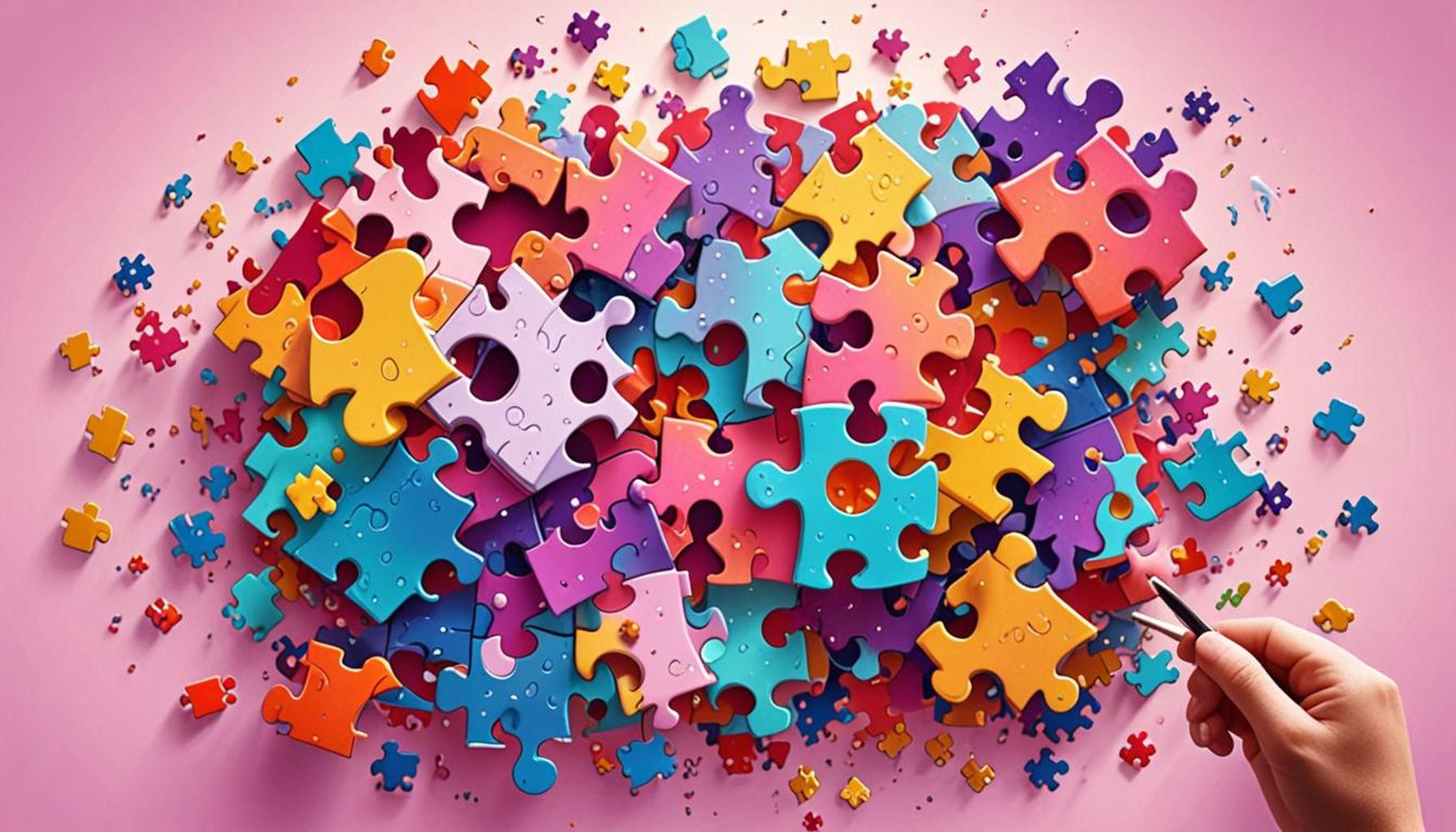
Unlock Your Mind with Complex Puzzles
Puzzles are not just a fun pastime; they are powerful tools for enhancing our problem-solving skills. In our fast-evolving world, where adaptation and innovative thinking are crucial, engaging with complex puzzles can provide a significant cognitive boost. By challenging your mind and pushing your mental boundaries, you can develop enhanced reasoning skills and a heightened ability to navigate everyday challenges.
Types of Complex Puzzles
Complex puzzles come in various forms, each targeting different aspects of cognitive function:
- Sudoku: This number-placement game challenges logic and pattern recognition. Typically played on a 9×9 grid, Sudoku requires players to fill in numbers without repeating them in any row, column, or grid. It enhances deductive reasoning and nurtures the ability to analyze multiple possibilities simultaneously.
- Crossword puzzles: Ideal for vocabulary building and lateral thinking, crosswords require players to think of synonyms and obscure facts. Engaging in these can boost verbal skills while expanding one’s knowledge base.
- Jigsaw puzzles: Requiring spatial awareness and visual perception, jigsaw puzzles compel players to see how pieces fit together. The satisfaction of completing a complex image offers a unique sense of achievement.
- Logic puzzles: These brain teasers challenge deductive reasoning and require careful analysis of given conditions. Popular types include grid puzzles and river crossing challenges, which sharpen analytical skills and improve concentration.
- Escape room challenges: A group activity that requires teamwork and collaborative problem-solving. Participants must solve a series of puzzles and riddles to “escape” within a time limit, showcasing the importance of synergy in overcoming obstacles.
Benefits of Solving Puzzles
While puzzles can be an entertaining diversion, they also offer numerous cognitive benefits:
- Enhances critical thinking: The evaluation of various solutions helps strengthen decision-making capabilities.
- Improves memory retention: Regular puzzle-solving exercises can enhance both short-term and long-term memory.
- Fosters creativity: Navigating through complex puzzles encourages out-of-the-box thinking and innovation.
- Encourages patience and perseverance: The process of working through challenging tasks cultivates grit and resilience in the face of difficulties.
In today’s fast-paced environment, the ability to stay mentally sharp and adaptable is essential. Complex puzzles can serve as engaging mental workouts, sharpening your brain and preparing you for a range of real-life situations. As you practice, the skills you cultivate through puzzle-solving can seamlessly translate to various areas of your life—from enhanced performance in the workplace to more effective solutions to personal challenges.
This article will explore how engaging with complex puzzles can lead to improved problem-solving abilities, offering insights into types of puzzles that are most effective and practical tips for integrating them into your daily routine. Whether you are a seasoned puzzler or just beginning your journey, get ready to dive into a world where play meets purpose and discover how to elevate your mental agility through the challenge of complex puzzles!
DIVE DEEPER: Click here to uncover the secrets
The Cognitive Transformation through Puzzle Engagement
Engaging with complex puzzles serves as an effective mental exercise that can lead to significant improvements in problem-solving skills. When you tackle a challenging puzzle, your brain enters a state of heightened awareness and focus. This can lead to not only improved cognitive functions but also the development of important life skills that are transferable to various real-world situations.
Puzzles require a diverse set of cognitive processes, such as breaking down problems, analyzing patterns, and synthesizing information. Each time you solve a puzzle, you are not just completing a task; you are honing your ability to think critically. This heightened state of analytical thinking fosters a mindset that is well-equipped for spontaneous and rigorous problem-solving.
How Complex Puzzles Challenge Your Cognitive Abilities
Complex puzzles engage various cognitive abilities simultaneously, making them distinctively effective in building problem-solving skills. Here’s how different types of puzzles specifically enhance cognitive functions:
- Logical reasoning: Puzzles like logic grid puzzles require the solver to deduce relationships and identify contradictions, enhancing both logical and critical thinking skills.
- Pattern recognition: Jigsaw puzzles and Sudoku foster the ability to recognize patterns, which is vital in both mathematical reasoning and everyday problem-solving tasks.
- Verbal reasoning: Crossword puzzles improve verbal skills by requiring solvers to recall vocabulary and synonyms, thereby enriching language and communication skills.
- Spatial reasoning: Engaging with 3D puzzles or even escape room scenarios enhances spatial awareness, helping individuals visualize and manipulate objects—skills crucial in fields like architecture and engineering.
- Collaborative problem-solving: Activities such as escape rooms highlight the importance of teamwork and communication in solving complex problems, an essential skill in contemporary workplaces.
The benefits of developing these skills extend beyond the simple enjoyment of puzzles. Research has shown that individuals who regularly engage with complex cognitive tasks experience long-term improvements in mental flexibility, creativity, and the ability to approach complicated problems with confidence. The act of solving a puzzle promotes neural plasticity, the brain’s ability to adapt and reorganize itself, ensuring that your problem-solving toolbox remains sharp as you navigate life’s challenges.
Moreover, puzzle-solving serves as a stress-relief mechanism. When you immerse yourself in a complex puzzle, the act of problem-solving can divert your mind from everyday stressors, allowing you to approach problems with a renewed sense of calm and clarity. This combination of mental workout and relaxation can be invaluable in maintaining overall mental health.
As we explore further into the world of complex puzzles, we’ll uncover actionable strategies that can seamlessly integrate these cognitive exercises into your daily routine. Whether by setting aside dedicated puzzle time or incorporating puzzles into family game nights, developing problem-solving skills through complex puzzles can become an enjoyable and rewarding habit that pays dividends in both personal and professional realms.
Developing Problem-Solving Skills through Complex Puzzles
Puzzles have long been recognized as tools that help in enhancing cognitive abilities and developing problem-solving skills. The engagement with intricate puzzles offers numerous opportunities to sharpen logical reasoning and critical thinking. As individuals navigate through challenges, they cultivate perseverance—a crucial trait in problem-solving.
| Category | Benefits |
|---|---|
| Enhanced Analytical Thinking | Complex puzzles encourage players to analyze situations from various angles, improving their analytical skills. |
| Improved Memory Retention | Engaging with challenging puzzles helps enhance memory capabilities, allowing individuals to recall patterns and strategies more effectively. |
Moreover, as individuals tackle various types of puzzles—be it logic puzzles, crosswords, or jigsaws—they learn to approach issues systematically. This approach is not only applicable in recreational activities but also translates effectively into real-world situations where strategic thinking is essential.
Complex puzzles also foster a sense of achievement upon completion, motivating individuals to face even tougher challenges. This psychological boost can significantly enhance one’s resilience in everyday problem-solving.
Overall, delving into complex puzzles is an invaluable method for nurturing essential problem-solving skills, ultimately paving the way for personal and professional growth.
DIVE DEEPER: Click here to uncover the benefits of puzzles for memory
The Transformative Learning Journey through Puzzle Solving
As individuals immerse themselves in the world of complex puzzles, they embark on a transformative journey that not only enhances their cognitive abilities but also cultivates resilience and perseverance. Solving intricate puzzles often requires multiple attempts and failures, mirroring real-life problem-solving scenarios. This iterative process teaches valuable lessons about tenacity; each unsuccessful attempt becomes a stepping stone rather than a setback.
The act of engaging in puzzles fosters a mindset that embraces challenges as opportunities for growth. Individuals learn to approach problems with a growth mindset, understanding that their skills can be developed through effort and persistence. Research indicates that developing such a mindset can lead to increased motivation and improved academic and professional outcomes. As puzzles require solvers to continually reassess their strategies and adapt their approaches, they build resilience that is crucial in navigating both personal and professional landscapes.
Puzzles and Emotional Intelligence
Interestingly, the benefits of solving complex puzzles extend beyond cognitive improvements to include enhancements in emotional intelligence. A study published in the *Journal of Educational Psychology* highlights how engaging with puzzles can promote greater self-regulation and empathy. When working on cooperative puzzles or group problem-solving activities, individuals become more attuned to their emotions and the emotions of others. This heightened emotional awareness translates into improved teamwork and interpersonal relationships.
Moreover, the satisfaction derived from successfully solving a puzzle enhances an individual’s self-esteem. The sense of achievement fosters confidence, reinforcing the idea that complex problems can be tackled with patience and strategy. This boost in confidence is not only beneficial for personal growth but is also applicable in professional settings, where problem-solving is often a team-oriented effort requiring collaborative strategies and effective communication.
The Role of Technology in Puzzle-Solving
The advent of technology has introduced a new dimension to complex puzzles, making them accessible to a broader audience. Online platforms offer a plethora of puzzle types, from virtual escape rooms to intricate logic challenges that can be solved collaboratively from different locations. These digital puzzles provide unique opportunities for developing problem-solving skills while fostering social connections, as friends and family can collaborate remotely. The rise of puzzle apps on smartphones also ensures that individuals can engage in quick mental workouts, integrating problem-solving into their busy lives.
Additionally, technology can aid in tracking progress over time, allowing individuals to see their improvements in problem-solving skills. By analyzing past performances, players can identify patterns in their thinking processes, thereby refining their strategies for future challenges. This data-driven approach aligns with modern learning methodologies, where feedback loops play a critical role in enhancing skill development.
Puzzles in Educational Settings
Schools have recognized the value of puzzles as educational tools, incorporating them into curricula to stimulate critical thinking and creativity among students. Educators use logic puzzles, brain teasers, and collaborative challenges to promote active learning and engagement. Programs that prioritize puzzle-solving not only improve academic performance but also prepare students with essential skills for the workforce, where innovative problem-solving abilities are in high demand.
Furthermore, community workshops that focus on puzzle-based learning are becoming popular. These interactive sessions encourage collaboration and resourcefulness among participants, creating communities united by a shared passion for solving complex problems. The engagement in these activities not only sharpens individual cognitive skills but also strengthens communal ties, showcasing the profound impact that puzzles can have on society.
In conclusion, the profound effects of engaging with complex puzzles extend far beyond mere entertainment. They shape the cognitive landscape of individuals, instilling resilience, emotional intelligence, and a growth-oriented mindset. As society continues to embrace the digital age, the integration of puzzles into daily routines and educational curricula promises to equip individuals with the crucial problem-solving skills necessary for success in a rapidly changing world.
DIVE DEEPER: Click here for an insightful exploration
Unlocking Potential Through Puzzle Engagement
The journey of developing problem-solving skills through complex puzzles reveals a multitude of benefits that extend into various facets of life. As we have explored, engaging with intricate puzzles not only sharpens cognitive abilities but also encourages resilience, creativity, and collaboration. These mental challenges effectively build a growth mindset, enabling individuals to view obstacles as opportunities for growth rather than insurmountable barriers.
Moreover, as technological advancements make puzzles more accessible, their influence on emotional intelligence and interpersonal relationships becomes increasingly significant. Whether through solo challenges or collaborative formats, solving puzzles fosters a sense of community and empathy, essential traits in today’s increasingly interconnected world. The skills developed through puzzle-solving translate seamlessly into academic and professional environments, preparing individuals for the complexities of modern-day problem-solving.
Furthermore, the integration of puzzles within educational settings shows promise for nurturing future generations with critical thinking and innovative problem-solving abilities. Educational institutions and community organizations alike are beginning to harness the power of puzzle-based learning, creating enriching environments that encourage personal and collective growth.
In conclusion, the commitment to solving complex puzzles is not merely a pastime; it is a transformative endeavor that equips individuals with the tools necessary to tackle real-world challenges. As we unlock the potential within each puzzle, we unknowingly unlock our capacity for enduring learning and adaptability in a rapidly changing landscape. Encouraging engagement with puzzles can pave the way for a more resilient and resourceful society poised to embrace the future with confidence.
Related posts:
How Puzzles Boost Creativity and Problem Solving in Kids
The effectiveness of memory games in strengthening cognitive skills in the elderly
The relationship between mathematical puzzles and the development of critical thinking in youth
The impact of trivia games on the enhancement of general knowledge and quick thinking in adults
How Reasoning Challenges Can Improve Cognitive Resilience in Students
Logical reasoning games: how to enhance decision-making and problem-solving skills

Linda Carter is a writer and puzzle expert specializing in mind games, brain teasers, and cognitive challenges. With extensive experience helping individuals enhance their problem-solving skills and think critically, Linda shares her knowledge on our platform. Her goal is to empower readers with practical advice, engaging puzzles, and strategies to sharpen their minds and achieve success in the captivating world of mind games and puzzles.