The Impact of Pattern Recognition on Solving Puzzles and Cognitive Challenges
The Significance of Understanding Patterns
Pattern recognition is a cornerstone of human cognition, a skill that shapes our perceptions and decisions daily. This fascinating cognitive ability enables us to spot similarities, make predictions, and draw conclusions based on structured information. Whether we realize it or not, the world around us is rife with patterns that serve as guides in our daily lives, influencing everything from our social interactions to our professional pursuits.
Brain Functionality
The brain’s capacity to recognize patterns is deeply rooted in its architecture. Neural pathways, which are connections between neurons, emerge and strengthen as we engage with our environments. This cognitive skill activates various brain regions, such as the prefrontal cortex and the temporal lobes, facilitating not only recognition but also the ability to anticipate outcomes. For instance, when approaching a problem we’ve encountered before, our brain quickly navigates established pathways to arrive at potential solutions, underscoring the significance of pattern recognition in cognitive processing.
Puzzle-Solving Efficiency
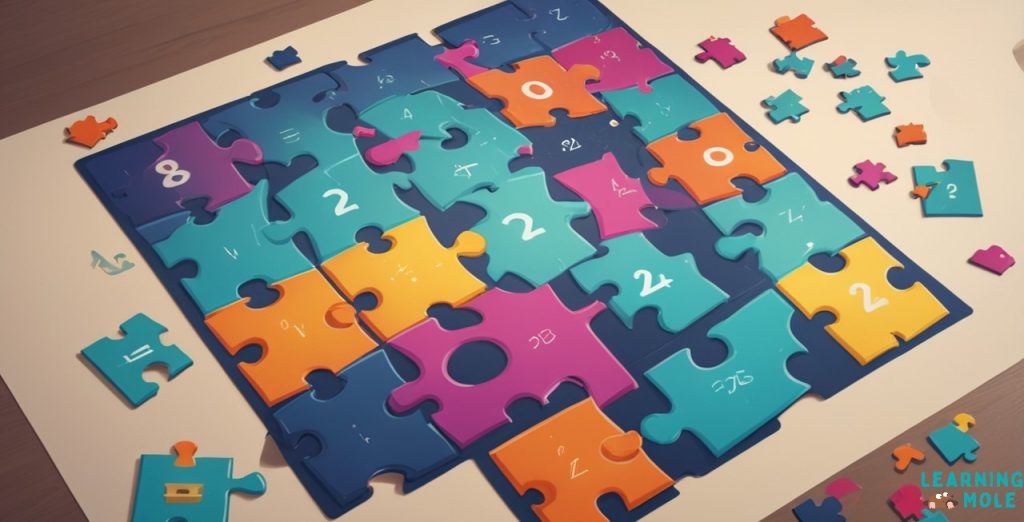
Consider the enjoyment and challenge of solving a jigsaw puzzle. As pieces come together, solvers often notice color schemes or edge shapes that might not be immediately apparent, allowing them to fit pieces more quickly. This ability to discern patterns provides valuable shortcuts, drastically enhancing puzzle-solving efficiency. Similar dynamics play out in mathematical problems. For example, when students recognize a common algebraic expression, it can lead them to rapidly solve equations that previously took much longer to approach.
Cognitive Development
Engaging in activities that encourage pattern recognition is crucial for cognitive development. Games that emphasize this skill, like chess or strategic video games, stimulate critical thinking and enhance analytical skills over time. Children who participate in pattern-based activities tend to perform better academically, demonstrating higher proficiency in subjects such as mathematics and science. Even adults can benefit—studies have shown that continued engagement with pattern recognition tasks can stave off cognitive decline associated with aging.
Real-World Applications
This cognitive phenomenon extends beyond traditional puzzles, influencing a myriad of real-world scenarios:
- Searching for trends in data analysis: Analysts in fields ranging from finance to healthcare rely on spotting patterns in large datasets to inform strategies and forecasts.
- Creating strategies in competitive games: From sports to board games, recognizing an opponent’s patterns can lead to developing effective counter-strategies, often determining the outcome of the game.
- Understanding complex narratives in literature and media: Readers and viewers often connect themes, character arcs, and plot devices, leading to a deeper appreciation and comprehension of narratives.
The importance of honing pattern recognition skills cannot be overstated. As we continue to explore this cognitive facet, we uncover pathways to elevate our problem-solving capabilities, affirming not only the practicality of these skills but their vibrancy within the tapestry of our intellectual lives.
DON’T MISS: Click here to unlock the cognitive benefits of mind games
Enhancing Problem-Solving Through Pattern Recognition
Pattern recognition is not just a cognitive function; it is a critical asset in enhancing problem-solving abilities. When faced with a puzzle or a significant cognitive challenge, individuals often rely heavily on the recognition of underlying patterns to navigate complexities. This reliance is particularly evident in various types of puzzles, whether they are physical like crossword puzzles or logical challenges found in Sudoku.
The Puzzle-Solving Process
The process of solving puzzles largely revolves around two essential components: observation and synthesis. First, an individual observes the elements at play—be it colors, shapes, numbers, or words. The ability to notice recurring elements or themes within these components leads to a layered understanding of the puzzle’s structure. For instance, in jigsaw puzzles, noticing the gradients of color may prompt one to group pieces before actually attempting to fit them together. This kind of foresight is grounded in an individual’s capacity for pattern recognition.
Moreover, studies indicate that the brain tends to optimize problem-solving through what psychologists term “chunking.” This cognitive shortcut allows individuals to group patterns or sequences of information into single units, thereby accelerating the problem-solving process. Whether one is deciphering an intricate crossword or simplifying a complex mathematical equation, chunking facilitates a more efficient flow of thought.
Influence on Cognitive Flexibility
Beyond immediate puzzle-solving tasks, pattern recognition cultivates significant cognitive flexibility. This flexibility enables individuals to adapt their thought processes and strategies when encountering new information or obstacles. For example, players of complex strategy games like chess often have to recognize not only their moves but also the patterns in their opponent’s strategies to anticipate future actions. Such cognitive flexibility is a valuable skill that transfers to various domains, from academic pursuits to everyday decision-making.
Contributions to Emotional Intelligence
Interestingly, pattern recognition extends into the realm of emotional intelligence as well. The ability to detect non-verbal cues such as facial expressions or body language can provide insights into other people’s emotions. This is particularly relevant in social settings where understanding dynamics or underlying tensions can influence the outcomes of discussions or negotiations. Individuals who sharpen their pattern recognition skills often find themselves better equipped to navigate interpersonal challenges, making it a vital tool in both personal and professional scenarios.
Practical Examples of Pattern Recognition in Action
Here are a few examples of how pattern recognition applies in various contexts:
- Data Visualization: Analysts utilize pattern recognition to identify trends in graphical data, leading to informed decisions in fields such as marketing and healthcare.
- Artificial Intelligence: Algorithms leverage pattern recognition to improve machine learning capabilities, enabling systems to make predictions based on historical data.
- Sports Psychology: Coaches and athletes analyze gameplay patterns to strategize effectively, exploiting opponents’ weaknesses while refining their own skills.
Ultimately, understanding the influence of pattern recognition on solving puzzles and cognitive challenges enriches our appreciation for this innate skill. As we delve deeper, it becomes clear that the implications of strong pattern recognition abilities stretch far beyond mere games, serving as a vital component of cognitive development and emotional intelligence.
| Type of Cognitive Challenge | Impact of Pattern Recognition |
|---|---|
| Sudoku Puzzles | Utilizing pattern recognition improves numerical agility and logical thinking, significantly enhancing solving speed. |
| Visual Puzzles | Pattern recognition in visual tasks fosters better memory retention and spatial awareness, empowering individuals to tackle complex arrangements. |
| Logic Games | Mastering patterns in logic games boosts critical reasoning abilities, allowing individuals to predict outcomes more effectively. |
The ability to discern patterns plays a crucial role in various cognitive challenges, enhancing our problem-solving skills. For instance, engaging in Sudoku puzzles relies heavily on identifying numerical patterns, which can lead to improved logical thinking and quicker solutions. Visually oriented challenges, on the other hand, promote spatial awareness through recognizing shapes and colors, further enhancing memory retention. Additionally, logic games that require understanding underlying patterns can elevate critical reasoning skills, enabling individuals to anticipate future moves with greater accuracy. Exploring the intricate relationship between pattern recognition and cognitive challenges not only stimulates the brain but also reveals the exciting potential for developing advanced problem-solving techniques. Each of these flow into a larger narrative about mental agility, paving the way for a deeper appreciation of cognitive development. It is vital to examine how consistent practice in these areas can translate to real-world applications, where intuitive recognition of patterns drastically reduces time and effort in decision-making processes.
EXPLORE MORE: Click here to enhance your critical thinking
The Role of Pattern Recognition in Learning and Development
Beyond enhancing immediate problem-solving abilities, pattern recognition plays a pivotal role in learning and cognitive development across various age groups. In educational settings, from early childhood through adulthood, the skills associated with pattern recognition help learners grasp complex concepts and retain information more effectively.
Educational Applications of Pattern Recognition
In classrooms, educators frequently employ visual aids and interactive tools that cater to students’ natural ability to identify patterns. For instance, using manipulatives in mathematics allows children to recognize numerical relationships before they can articulate them. Research suggests that students who engage in activities requiring pattern recognition tend to perform better in subjects such as math and science. By demonstrating the relevance of patterns, teachers encourage critical thinking and foster a deeper understanding of the material.
Moreover, language acquisition heavily relies on pattern recognition. As children learn to speak and read, they intuitively recognize linguistic structures, phonetic patterns, and vocabulary. The phonics approach to reading, which emphasizes the relationships between sounds and letters, is a testament to how pattern recognition is integrated into learning. Evidence from various studies shows that children who learn to discern these patterns earlier in their education not only read more fluently but also develop a love for learning, enhancing their overall academic performance.
Pattern Recognition and Aging
Interestingly, the significance of pattern recognition evolves with age. For older adults, engaging in puzzles and cognitive games serves not only as entertainment but also as a means to maintain cognitive health. Studies indicate that consistently participating in puzzle-solving activities can slow down cognitive decline and strengthen neural pathways associated with memory and reasoning. This notion aligns with the broader understanding that mental challenges stimulate brain activity, fostering both neuroplasticity and cognitive resilience.
Real-World Problem Solving and Innovation
Pattern recognition also finds practical application in fields like engineering and technology. Professionals often leverage their abilities to identify recurring design flaws during product development, subsequently enhancing safety and efficiency. In coding and software development, programmers frequently rely on pattern recognition to troubleshoot errors and streamline processes. This application extends into innovative fields such as biotechnology, where emerging scientists analyze genetic sequences and identify patterns that could lead to breakthroughs in medical treatments.
Furthermore, beyond traditional puzzles, pattern recognition is crucial in predicting outcomes in business scenarios. Companies utilize data analytics to discern consumer behavior and trends, helping them create targeted marketing strategies. This dependency on recognizing patterns in data underscores the urgency for professionals in various industries to develop robust pattern recognition skills, making it a critical competency in competitive job markets.
Cultivating Pattern Recognition Skills
Recognizing the importance of developing pattern recognition skills is paramount, not just for personal success but also for societal advancement. Simple activities can enhance this ability, such as engaging in musical training, exploring visual arts, or participating in memory games. Such activities cultivate creativity and enhance cognitive capacities. As individuals hone their pattern recognition skills, they not only become more adept at solving puzzles but also improve their overall cognitive function, emotional intelligence, and problem-solving competencies.
In essence, the profound impact of pattern recognition on solving puzzles and tackling cognitive challenges extends far beyond entertainment; it permeates education, innovation, and personal growth, shaping how individuals approach problem-solving throughout their lives.
DISCOVER MORE: Click here to dive deeper
Conclusion: Embracing the Power of Pattern Recognition
In a rapidly evolving world, the ability to recognize and interpret patterns is not merely a cognitive skill—it is an essential tool for navigating both challenges and opportunities. The exploration of pattern recognition vividly illustrates its critical role across various dimensions of life, from educational settings that nurture young minds to innovative industries that drive technological advancement. By honing our pattern recognition skills, we not only enhance our capability to solve puzzles but also cultivate a deeper understanding of the world around us.
As students engage with patterns through interactive learning tools, they build the foundational skills necessary for success in STEM fields and beyond. Meanwhile, older adults benefit from participatory challenges that promote mental agility, thereby counteracting cognitive decline and fostering lifelong learning. The implications of pattern recognition extend into diverse professional realms—from data analysis to creative problem-solving—underscoring its impact on enhancing productivity and innovation in the workplace.
Ultimately, the journey toward mastering pattern recognition is one of ongoing development. Individuals and educators alike have the opportunity to incorporate activities that strengthen these skills, thus encouraging not only personal growth but also a collaborative spirit within communities. As we delve deeper into the significance of patterns in our daily lives, we pave the way for innovative solutions to complex issues, reflecting the transformative power of cognitive processes in shaping our futures.
In conclusion, the enriching impact of pattern recognition on solving puzzles and addressing cognitive challenges illustrates its necessity in our everyday lives. Whether through playful engagement with puzzles or serious application in professional contexts, recognizing patterns empowers us to think critically, adapt swiftly, and innovate boldly in an ever-changing landscape.
Related posts:
The Psychology Behind Pattern Recognition in Logic Games Explained
How Pattern Recognition Increases Competitiveness in Puzzle Competitions
How Pattern Recognition Contributes to Success in Quick Thinking Challenges
The Intersection of Pattern Recognition and History-Based Guessing Games
Pattern Recognition in Logic Games: How to Improve Mental Agility
Pattern Recognition in Trivia Games: Stimulating Knowledge and Memory

Linda Carter is a writer and puzzle expert specializing in mind games, brain teasers, and cognitive challenges. With extensive experience helping individuals enhance their problem-solving skills and think critically, Linda shares her knowledge on our platform. Her goal is to empower readers with practical advice, engaging puzzles, and strategies to sharpen their minds and achieve success in the captivating world of mind games and puzzles.