The Importance of Puzzles in Developing Strategic Planning and Execution Skills
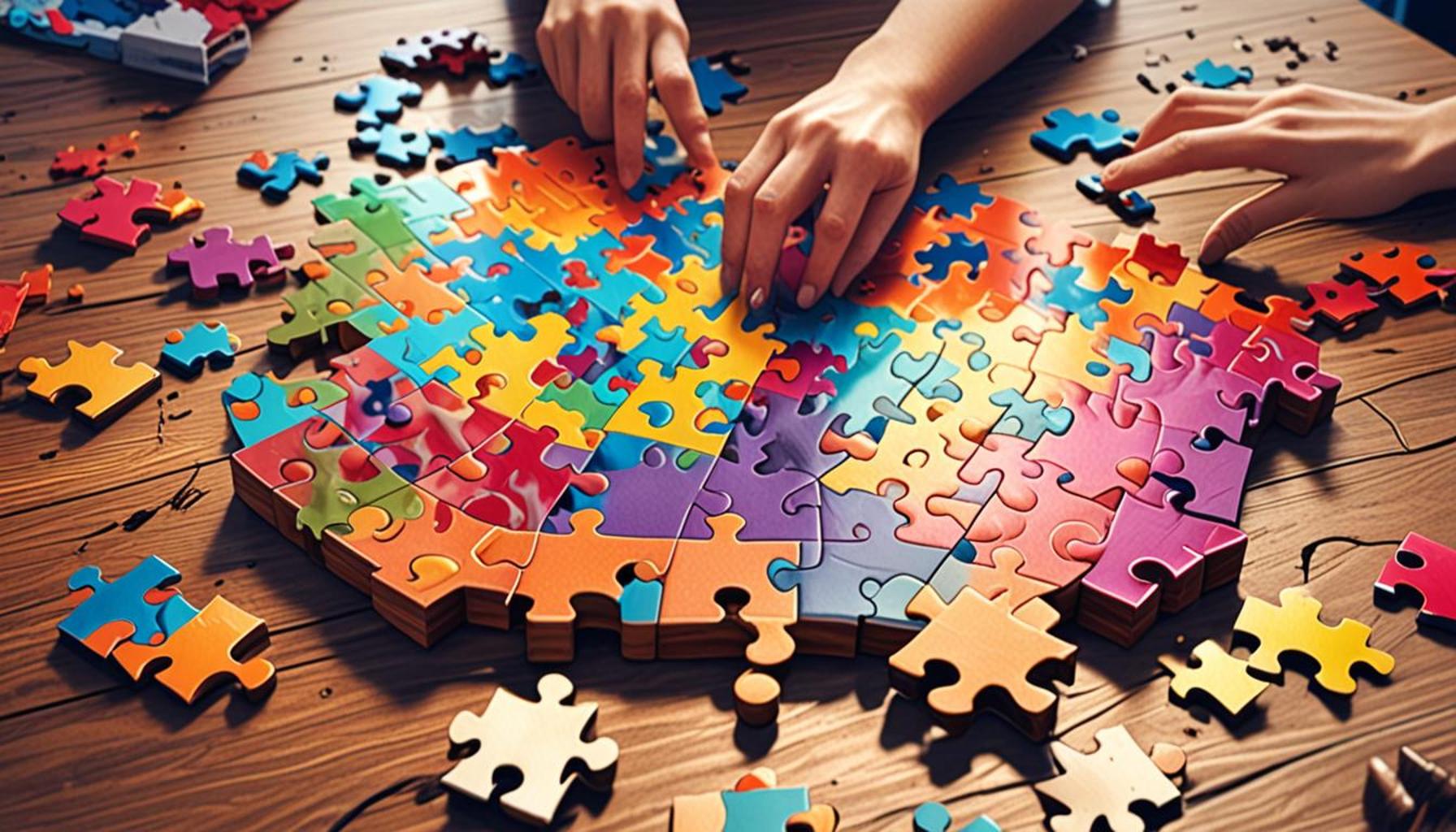
Unlocking the Mind: The Connection Between Puzzles and Strategic Skills
Puzzles have long been a source of entertainment, but their value extends far beyond mere leisure. Engaging with puzzles can significantly enhance cognitive abilities, particularly in the realms of strategic planning and execution skills. These mental challenges stimulate various parts of the brain and foster skills that can be applied in everyday life.
Consider how puzzles achieve this:
- Enhancing Problem-Solving: Puzzles require identifying patterns and devising effective strategies. For instance, solving a complex jigsaw puzzle involves visualizing the final image, recognizing where each piece fits, and anticipating challenges that may arise as the puzzle progresses. This skill is directly transferable to situations such as logistics planning in a business where visualizing the entire operation can lead to more efficient outcomes.
- Boosting Critical Thinking: Players must evaluate information and assess different approaches to arrive at a solution. A game like chess showcases this perfectly; each move requires careful consideration of potential consequences and counter-moves, thereby enhancing strategic foresight in competitive environments, whether in sports or corporate negotiations.
- Promoting Patience and Focus: Successfully solving a puzzle demands persistence, a key trait for executing plans effectively. Engaging with challenging puzzles can teach individuals the value of sticking with a task until completion. This translates well into the workforce, where perseverance and attention to detail can greatly impact project success.
Research suggests that those who regularly tackle puzzles exhibit improved logical reasoning and analytical skills. A study published in the journal “Intelligence” found that participants who frequently engaged in puzzle-solving showed enhanced performance in cognitive tests. This cognitive workout translates into real-world applications, from crafting business strategies to managing personal projects successfully.
The variety of puzzles available caters to different skill levels and interests, encouraging widespread participation. From jigsaw puzzles to Sudoku, crosswords, and intricate escape rooms, each type fosters a unique aspect of strategic thinking. For example, crossword puzzles enhance vocabulary and comprehension skills, while escape rooms promote teamwork and quick decision-making under pressure.
Additionally, engaging in these activities not only sharpens mental acuity but also creates an opportunity for social interaction—essential for developing teamwork and collaboration skills. Many families, friends, and coworkers bond over solving puzzles together, which can lead to improved interpersonal relationships and ultimately a more harmonious working environment.

In an ever-evolving landscape, the ability to think strategically is invaluable. Employers are increasingly seeking individuals who can navigate complex problems and devise innovative solutions. By incorporating puzzles into daily routines, individuals can unlock their potential, paving the way for success in both personal and professional endeavors. Whether you’re solving a quirky riddle at a local coffee shop or navigating challenging puzzles in a board room, the skills you develop can serve you for a lifetime.
DISCOVER MORE: Click here to enhance your problem-solving skills
Why Puzzles Matter: Cultivating Cognitive Skills for Success
The relationship between puzzles and strategic planning is deeply rooted in the cognitive mechanisms that kick into gear when individuals engage with them. Each puzzle presents a challenge that not only tests intelligence but also encourages creative problem-solving mechanisms. For instance, when individuals encounter a difficult grid in a game of Sudoku, they must think multiple steps ahead, considering not only their current move but also its repercussions in the broader context of the puzzle. This type of forward thinking is essential in strategic planning, where envisioning potential outcomes is crucial to making informed decisions.
Puzzles also enhance executive function skills—a set of mental skills that include working memory, flexible thinking, and self-control. Engaging with puzzles requires individuals to juggle multiple variables, an exercise that refines their ability to balance workloads and priorities in high-stakes environments. Whether it’s a time-sensitive business project or a family event that requires coordination, the skills honed through puzzling can lead to a more organized approach in execution.
Notably, the mental workout provided by puzzles can lead to measurable improvements in planning and execution abilities. Here are several key benefits exhibited by individuals who regularly engage with puzzles:
- Strategic Thinking: Puzzles often involve a level of strategy that mimics real-life problem-solving. By analyzing relationships and potential moves, individuals develop a more nuanced understanding of strategy, which is essential in business planning and execution.
- Adaptability: As puzzles shift and evolve, they require a flexible mindset. This fosters adaptability, an invaluable trait in today’s fast-paced professional landscape where requirements and conditions frequently change.
- Attention to Detail: Many puzzles demand meticulous attention to detail, as the slightest oversight can lead to an incorrect solution. Cultivating this skill is prime for executing strategic plans that require precise coordination and thoroughness.
- Team Dynamics: Engaging in puzzles collaboratively, such as during trivia night or escape rooms, strengthens team-building abilities. Participants learn to communicate effectively, delegate tasks, and respect differing opinions—skills that are fundamental in any organized team setting.
Furthermore, the medium through which puzzles are presented offers an avenue for bridging generational gaps. From traditional board games to innovative online escape rooms, puzzles cater to all ages, encouraging families and friends to interact and collaborate. Engaging in these activities can lead to deeper connections and foster a collaborative spirit that reflects in professional environments.
The cognitive benefits that come from solving puzzles extend beyond individual development; they can revolutionize how teams function. As we delve deeper into the subject, it becomes increasingly evident that puzzles are not merely a recreational pastime. Instead, they serve as a powerful tool that cultivates essential skills for navigating the complexities of modern life, both personally and professionally.
The Importance of Puzzles in Developing Strategic Planning and Execution Skills
Puzzles have long been celebrated not just for their entertainment value, but for their profound ability to cultivate critical skills in strategic planning and execution. Engaging with puzzles fosters a mindset centered on analysis and foresight, crucial for making informed decisions. As individuals confront challenges within puzzle frameworks, they develop a structured approach to problem-solving that extends beyond the gaming experience into real-world scenarios.
Enhancing Cognitive Abilities
One of the primary advantages of puzzles is their role in enhancing cognitive abilities. By piecing together various elements of a puzzle, individuals sharpen their analytical skills. For instance, the process of recognizing patterns, making connections, and anticipating the consequences of different moves can significantly improve an individual’s ability to strategize in their professional lives. These cognitive challenges mirror many aspects of strategic planning in business environments, where foresight and adaptability are paramount.
Boosting Team Collaboration
Moreover, puzzles can serve as excellent team-building exercises. Collaborative efforts in solving puzzles foster communication and synergistic relationships among team members. This collaboration mirrors the need for cohesive strategic planning, where teamwork is essential for executing tasks effectively. Engaging in puzzle-solving as a group encourages participants to share ideas, integrate diverse perspectives, and appreciate the value of each member’s contribution toward a common goal.
| Category | Key Aspects |
|---|---|
| Cognitive Development | Enhances analytical skills and sharpens problem-solving capabilities. |
| Teamwork | Facilitates collaboration and improves communication among team members. |
Engaging in puzzles can also stimulate creative thinking by challenging individuals to explore unconventional solutions. This inventive mindset plays a vital role in strategic planning, as it encourages adaptability and resilience when faced with unexpected obstacles. Overall, incorporating puzzles into personal and professional development plans can yield substantial benefits, making them a valuable tool for anyone looking to strengthen their strategic capabilities.
DISCOVER MORE: Click here to uncover the cognitive benefits of mind games
Harnessing Puzzles for Real-World Applications
One cannot underestimate the potential puzzles hold in practical applications, particularly in the realm of business and teamwork. Corporations are increasingly recognizing the profound influence of puzzles as tools for training and employee engagement. For example, companies like Google and Microsoft have incorporated puzzle-based team-building exercises into their corporate retreats. These activities serve not only as fun breaks from the grind but also provide employees avenues to fine-tune their strategic planning and execution skills in a low-stakes environment.
The growing trend of escape rooms as team-building experiences underscores this point. Participants are thrust into a simulated crisis requiring collective problem-solving, decision-making, and strategic execution under pressure. According to a report from the Journal of Applied Psychology, teams that engage in interactive puzzle-solving activities boast a 20% increase in collaborative efficiency and problem-solving capabilities compared to teams that did not engage in such exercises. This highlights how puzzles can translate into real-world success.
Furthermore, puzzles can serve as a diagnostic lens, offering insights into personal strengths and weaknesses within a team. By analyzing the dynamics that emerge while solving a puzzle, leaders can identify who excels in strategic thinking, who shines in detailed execution, and who plays the role of mediator when conflicts arise. Understanding these roles can inform better resource allocation in project planning and execution phases.
Research has also shown that regular engagement with puzzles leads to improvements in patience and perseverance—qualities often overlooked in the fast-paced business world. Studies conducted by institutions such as Stanford University have shown that individuals who enjoy solving puzzles display greater resilience when faced with complex projects or setbacks. This resilience is crucial for effective strategic execution, as stakeholders must remain composed and solution-oriented when challenges arise.
Importantly, puzzles pave the way for fostering a growth mindset—the belief that abilities can be developed through dedication and hard work. This mindset is becoming increasingly vital in modern workplaces, where innovation and adaptability are key to staying competitive. Engaging with puzzles teaches individuals to embrace challenges and persist in the face of obstacles, attributes that are directly transferrable to strategic planning. As teams refine their skills through engaging in puzzles, they not only build their individual capacities but also strengthen the overall dynamic within the group.
Moreover, the integration of technology into puzzles has also paved the way for novel avenues of engagement. Online puzzle platforms and mobile applications allow teams to connect remotely while solving problems together. As more companies adopt hybrid working models, these digital innovations will become invaluable in maintaining collaborative efforts and planning across diverse geographical landscapes.
The incredible versatility of puzzles demonstrates their multifaceted contributions to personal and team growth. As we explore deeper into the implications of puzzles on strategic planning and execution skills, it’s clear that they can act as a conduit for transformative learning and development, proving that the journey of puzzle-solving is as important as the destination of success.
DIVE DEEPER: Click here to boost your memory with puzzles
Conclusion: Unlocking Potential Through Puzzles
In a world characterized by rapid change and complex challenges, enhancing strategic planning and execution skills has never been more critical. The exploration of puzzles reveals their extraordinary capacity to cultivate these essential abilities—not just in individual team members but within teams as a whole. By integrating puzzle-solving into professional development, organizations can harness the power of creative thinking, collaboration, and resilience.
Puzzles not only serve as effective engagement tools for teams but also promote a sense of unity when faced with obstacles. As demonstrated through various studies, participating in puzzle-based activities boosts collaborative efficiency and enhances problem-solving capabilities. These experiences directly lead to improved workplace dynamics and signify a shift toward a culture that values persistence, adaptability, and the embrace of challenges.
Moreover, the shift towards digital puzzle solutions opens up innovative avenues for remote and hybrid teams. As organizations continue to evolve, leveraging technology in conjunction with puzzles can ensure ongoing collaboration regardless of geographical constraints. This adaptability not only fosters teamwork but also equips employees with the strategic skills required to manage complexities in an increasingly interconnected world.
Ultimately, the journey through puzzles illuminates the profound lessons of teamwork, strategy, and execution. As companies continue to explore these dynamics, they unlock pathways to success that go beyond mere problem-solving, enriching the very fabric of their organizational culture. Embracing puzzles might just be the key to building resilient, forward-thinking teams ready to tackle tomorrow’s challenges.
Related posts:
The Influence of Team Strategy Games on Collaborative Thinking Dynamics
The Importance of Strategic Thinking in Classic Board Games
The Intersection Between Simulation and Strategy Games in Business Leader Development
Developing Strategic Intuition Through Mystery and Deduction Games
How to Create New Puzzles to Stimulate Strategic Thinking in Children
How Logic Challenges Stimulate Creativity in Strategic Solutions

Linda Carter is a writer and puzzle expert specializing in mind games, brain teasers, and cognitive challenges. With extensive experience helping individuals enhance their problem-solving skills and think critically, Linda shares her knowledge on our platform. Her goal is to empower readers with practical advice, engaging puzzles, and strategies to sharpen their minds and achieve success in the captivating world of mind games and puzzles.