The influence of puzzles on the improvement of cognitive skills in adults
The Role of Puzzles in Enhancing Adults’ Cognitive Skills
Everyday life presents challenges that often require quick thinking and problem-solving abilities. Among the numerous tools available for enhancing these cognitive skills, puzzles offer a unique blend of entertainment and mental exercise. As adults navigate the complexities of their daily routines, engaging with puzzles can provide a valuable boost to their cognitive functions.
Research has shown that regularly engaging with puzzles can lead to significant improvements in various cognitive areas, such as:
- Memory: Engaging in puzzle-solving activities encourages active recall, which is the ability to retrieve information from memory. This stimulation can greatly enhance memory, making it easier to remember names, faces, and even crucial details from work or personal life. Studies indicate that adults who regularly do crossword puzzles exhibit better verbal memory compared to those who do not.
- Attention: Puzzles demand a level of focus and attention to detail that spills over into daily tasks. Adults who spend time solving puzzles find that their ability to concentrate on lengthy work assignments or complex projects improves significantly. This enhanced focus is vital in today’s fast-paced work environments where distractions are rampant.
- Problem-solving: Puzzles are inherently designed to challenge the brain’s problem-solving abilities. Engaging with complex jigsaw puzzles or logic-based games like Sudoku helps to refine analytical skills. For instance, learning different strategies to complete a Sudoku board not only sharpens one’s reasoning skills but is also beneficial in fields such as mathematics, programming, and even strategic planning in business.
Furthermore, puzzles come in many forms, appealing to a broad audience. Popular types include:
- Crossword puzzles: These puzzles not only stimulate vocabulary but also challenge the solver’s associative thinking. The New York Times crossword, for example, has a dedicated following and often features clues that require lateral thinking, thus enhancing cognitive flexibility.
- Sudoku: This number-placement game relies on logical reasoning, making it a favorite among adults looking to engage their analytical skills. It’s commonly found in newspapers and smartphone apps, providing a quick way to stimulate the mind during a lunch break or commute.
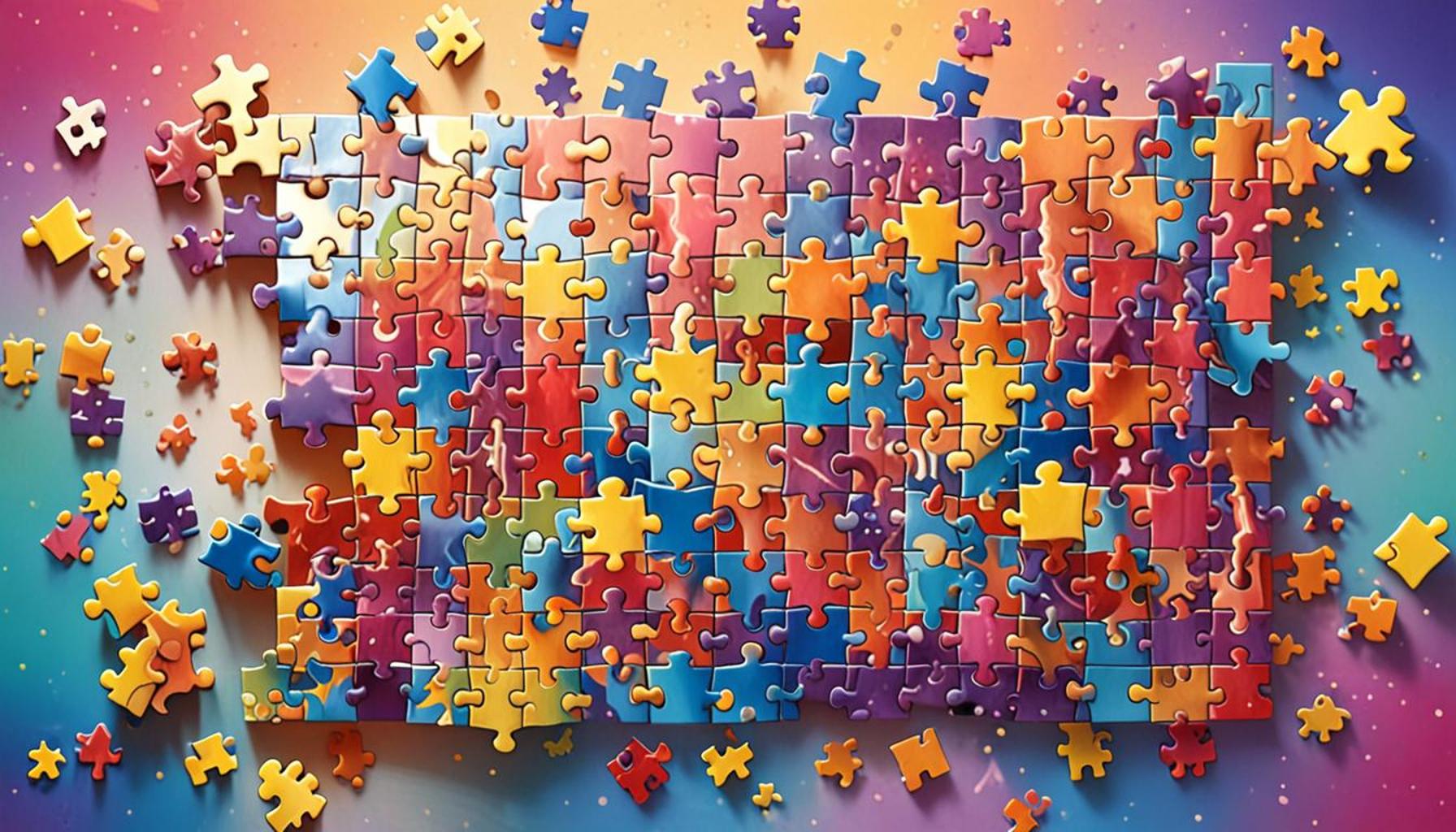
- Jigsaw puzzles: Beyond simple assembly, these puzzles are excellent for enhancing visual-spatial reasoning. The act of fitting pieces together encourages critical thinking and visual memory. Large jigsaw puzzles can serve as a great activity for family gatherings, promoting collaborative problem-solving.
Engaging with these activities not only provides a mental workout but also fosters a sense of achievement and relaxation. The blend of challenge, learning, and leisure makes puzzles an engaging option for cognitive enhancement. Moreover, understanding the relationship between puzzles and cognitive improvement can inspire adults to harness these traditional brain games as effective tools for enriching their intellectual lives.
As we continue to recognize the importance of mental fitness, incorporating puzzles into our daily routines may be one of the simplest yet most effective strategies to maintain and enhance cognitive agility throughout adulthood. Whether it’s dedicating a few minutes each day to a crossword puzzle or gathering friends for a jigsaw night, the benefits of puzzles are both profound and accessible.

DISCOVER MORE: Click here to enhance your decision-making skills
The Cognitive Benefits of Engaging with Puzzles
As adults grapple with the demands of work and personal lives, cognitive skills become increasingly vital for navigating daily challenges. The inclusion of puzzles in one’s routine has been shown to trigger significant enhancements in critical mental faculties. Engaging with puzzles is not merely a pastime; it serves as an effective method for boosting various cognitive skills essential in adulthood.
The interplay between puzzles and cognitive enhancement is well-documented, with studies revealing a myriad of benefits stemming from regular puzzle-solving activities. One of the primary skills improved through this practice is memory. Research indicates that active involvement in puzzles, particularly those that encourage recall and problem-solving, can lead to a marked increase in overall memory capacity. When adults immerse themselves in crossword puzzles or memory games, they stimulate neural connections that underpin verbal and episodic memory. This enhancement is critical in professional settings where quick information recall is crucial.
Alongside memory, attention is another cognitive skill that puzzles effectively develop. Puzzles often require prolonged concentration and meticulous attention to detail. Adults who frequently engage with puzzles typically report improved focus in their other tasks, translating to better performance in work environments fraught with distractions. Tasks such as sorting through emails, analyzing data, or engaging in creative processes benefit from the heightened focus refined through puzzle-solving.
Moreover, the analytical nature of many puzzles fosters enhanced problem-solving abilities. As adults tackle logical challenges found in Sudoku or complex jigsaw puzzles, they cultivate a robust set of analytical skills that are applicable in various domains, including mathematics, programming, and business strategy. Research has consistently indicated that individuals who engage in logic-based puzzles demonstrate superior skills in reasoning and critical thinking. This aspect of cognitive improvement is particularly appealing to professionals looking to sharpen their decision-making capabilities in high-pressure situations.
Diverse Puzzle Forms and Their Unique Advantages
The accessibility and diversity of puzzles cater to a wide audience, ensuring that individuals can choose forms that resonate best with them. Below are some popular types of puzzles and the specific cognitive benefits they offer:
- Crossword Puzzles: These word-based challenges not only boost vocabulary but also enhance cognitive flexibility as solvers must employ lateral thinking to connect clues with answers.
- Sudoku: This number-solving puzzle emphasizes logic and reasoning skills, fostering a sharper analytical mindset that is beneficial in numerically driven disciplines.
- Jigsaw Puzzles: Requiring visual-spatial reasoning, these puzzles improve critical thinking skills as solvers assess and manipulate shapes to create a cohesive image.
Each puzzle form invites adults to engage differently, promoting cognitive development through varied methods of challenge. The engaging nature of puzzles not only leads to skill enhancement but also creates a satisfying sense of accomplishment, making them a worthwhile addition to an adult’s cognitive enhancement toolkit.
| Cognitive Skill | Impact of Puzzles |
|---|---|
| Memory | Engaging in puzzles can enhance short-term and working memory by requiring adults to remember rules, patterns, and strategies. |
| Problem-Solving Skills | Puzzles challenge individuals to think critically and devise strategies, thereby improving overall problem-solving abilities that translate into real-life situations. |
| Attention to Detail | Solving elegant puzzles necessitates focus and concentration, training the brain to pay more attention to details in various contexts. |
| Logical Thinking | Puzzles often involve sequences and patterns, fostering logical sequencing skills that are vital for structured thinking. |
The various cognitive skills enhanced through puzzle solving—such as memory, problem-solving, attention to detail, and logical thinking—not only benefit mental capacity but also cultivate a sharper mind. By regularly engaging in activities like crosswords, Sudoku, or jigsaw puzzles, adults may find a significant boost in their cognitive prowess. It’s an intriguing cycle: as these skills improve, so does the enjoyment derived from such tasks, creating a compelling reason for adults to incorporate puzzles into their daily lives. Additionally, research suggests that continuously challenging the brain through puzzles may even delay cognitive decline with age, making this a captivating area for anyone looking to maintain their mental acuity throughout their lifespan.
DIVE DEEPER: Click here to discover more about puzzles and memory retention
The Social and Emotional Benefits of Puzzle Engagement
While the cognitive advantages of puzzles are noteworthy, the social and emotional dimensions they introduce into an adult’s life also contribute significantly to overall cognitive improvement. As adults engage in puzzle-solving activities, they often do so within a communal setting, whether at home with family, in a social club, or through online platforms. This social interaction not only enhances cognitive skills but can also bolster emotional intelligence and foster supportive relationships.
Participating in puzzles can serve as a platform for teamwork and collaboration, particularly in group settings. Working collectively on jigsaw puzzles or competing in trivia nights exemplifies how individuals share strategies, negotiate ideas, and communicate effectively to achieve a common goal. Such interactions enhance verbal communication skills and empathy, as participants learn to appreciate diverse perspectives and approaches to problem-solving. According to a study published in the Journal of Personality and Social Psychology, social engagement through shared activities like puzzles increases an individual’s sense of belonging and cohesion within a group, which is essential for mental health in adulthood.
Additionally, puzzles can act as powerful tools for stress relief. The focused nature of solving puzzles requires individuals to immerse themselves in the task, effectively keeping distracting thoughts at bay. This engagement mirrors practices found in mindfulness therapy, where individuals learn to concentrate on the present moment. Adults who regularly partake in puzzles report lower levels of anxiety and enhanced mood as they find solace and joy in their accomplishments. The act of completing a challenging puzzle not only provides a sense of achievement but also stimulates the release of endorphins, chemicals in the brain that promote a sense of well-being.
Puzzles as Lifelong Learning Opportunities
Puzzles also possess transformative qualities that extend into the sphere of lifelong learning. Many adults leverage puzzles as tools for intellectual growth, particularly in learning new skills or languages. For instance, language-based puzzles, such as crossword or word search puzzles, encourage vocabulary expansion and language acquisition. A study published in the American Journal of Alzheimer’s Disease and Other Dementias highlighted that adults who engaged in puzzles designed for language skills boasted improved language comprehension and retention.
Moreover, puzzles can offer a gateway into new subjects of interest, prompting adults to explore unfamiliar domains. Educational games and puzzles related to science, history, and art encourage inquisitive minds to delve deeper into subjects beyond the surface level. The popular game “Trivia Crack,” for example, not only hones quick recall abilities but also introduces players to a plethora of facts that ignite curiosity and inspire further research. Such venues for learning are particularly vital in a rapidly evolving job market where ongoing education has become synonymous with career demand.
Incorporating puzzle-solving into everyday life synthesizes numerous cognitive, social, and emotional benefits. As advancements in neuroscience continue to unfold, it becomes increasingly clear that the influence of puzzles on the evolution of cognitive skills in adults extends well beyond mere entertainment. By engaging in these activities, adults can not only sharpen their minds but also enrich their social networks and enhance their overall quality of life.
DISCOVER MORE: Click here to learn about enhancing your strategic thinking skills
Conclusion
In summary, the multifaceted influence of puzzles on cognitive skills in adults cannot be overstated. Engaging in puzzles not only stimulates problem-solving and critical thinking abilities but also fosters an environment for social interaction and emotional well-being. Through collaborative efforts in puzzle-solving, adults enhance their verbal communication and empathy, laying the foundation for stronger relationships and a heightened sense of belonging. The visceral engagement required to solve puzzles parallels mindfulness practices, allowing adults to experience mental clarity and reduced stress levels.
Moreover, puzzles serve as dynamic tools for lifelong learning, encouraging adults to explore new skills, broaden their knowledge base, and stay intellectually agile in an evolving world. They provide a gateway to unfamiliar territories—be it new languages or intricate subjects—enhancing not only retention but also spurring curiosity and ongoing education, which are essential in today’s fast-paced job market.
As we continue to uncover the cognitive benefits of puzzle engagement, it is crucial for adults to recognize the potential these activities have in contributing to their overall mental acuity and quality of life. By integrating puzzles into their daily routines, adults can experience a harmonious blend of cognitive, social, and emotional enrichment. The evidence is clear: puzzles are more than just a pastime; they are a powerful catalyst for cognitive improvement and personal growth. The future of puzzle engagement holds promise, paving the way for adults to further explore the depths of their cognitive abilities while enjoying the myriad benefits that these stimulating activities provide.
Related posts:
The relationship between mathematical puzzles and the development of critical thinking in youth
How Digital Puzzles are Shaping Cognition in a Virtual World
The impact of logic games on the improvement of decision-making in work environments
The influence of reasoning games on the improvement of cognitive skills in adults
The connection between Sudoku practice and the increase in concentration capacity in adolescents
The relationship between chess practice and the improvement of working memory in students

Linda Carter is a writer and puzzle expert specializing in mind games, brain teasers, and cognitive challenges. With extensive experience helping individuals enhance their problem-solving skills and think critically, Linda shares her knowledge on our platform. Her goal is to empower readers with practical advice, engaging puzzles, and strategies to sharpen their minds and achieve success in the captivating world of mind games and puzzles.